Saturday, January 31, 2015

Do You Have Time to Kill? by Jamie Hill (Author blog post)


My latest romantic suspense novel is now available at Amazon and will be in print in a few weeks. Time To Kill is book 2 in my Witness Security series. 

People seem to either love or hate series work. Readers have told me when they get to the end of a book and discover a cliffhanger, they sigh and do some quick research to find out if the book is part of series. Some find this disappointing. While I can totally relate to that position, I have my own reasons for preferring series work. (But not cliffhangers. I hate cliffhangers.)

When I finish reading a book I enjoyed, I have trouble leaving that ‘world’. (Similar to watching the last episode of Parenthood this week. I’ve rewatched the ending multiple times and need to erase the silly thing off my DVR so I can move on!) Back to books. Nora Roberts was the first author I read who really did series well, in my humble opinion. For sweet contemporary romance I grew up reading Danielle Steel, but her titles were singles. Nora introduced me to trilogies, where there might be three characters that are connected in some way and they each have their own story to tell. I discovered I loved that method of storytelling. I always wondered what might have happened to characters I enjoyed, and the series method gives me the opportunity to find out.

The first series I authored dealt with three cops who worked together in the Wichita PD. A Cop in the Family was fun because Family Secrets was one of my first novels, and I had a hard time moving on from Jack and Crystal. By writing more books in their world I was able to show what they were doing in later years.

My romance series, The Blame Game, focused on a family and relationships that four members developed over a span of twenty years. That was great fun to write.

Witness Security is set in Topeka, Kansas, at a fictional Witsec office. There will be four books, each telling the story of a different US Marshal working there. Doug Jackson found true love in book 1. His partner Jordan Burke gets her turn in book 2. If you know my writing, you’ll know that I’m not spoiling anything to say I always write happy endings, because that’s what I like to read. How they get there is the fun part.

I’ll continue to write series books because that’s what I love. I promise to always let the reader know up front that the book is part of a series. And I try to make each book stand alone, so you don’t have to read them in order if you stumble upon the second or third book first. But I recommend readers try to read them in order when possible, because that’s the way they were written. Oh—and no cliffhangers. My stories will be complete when you reach ‘The End’. Then you’ll get a peek at what’s to come in the next book. In this case, you can read the beginning of Cover of Darkness, Book 3 in Witness Security. 

I hope you enjoy reading them as much as I did writing them!

Time To Kill
Witness Security

US Marshal Jordan Burke is happy for her partner when he takes a month off for paternity leave, but she's not happy about her substitute partner. Nick Pierce worked for the Topeka Witsec office years ago and left under less than the best of circumstances. When he’s asked to fill in he hesitates, but curiosity about Jordan makes him accept the job. The minute he sees her again he doesn’t regret his decision. From Atlanta to Los Angeles, Jordan and Nick discover that danger, and help, can come from the strangest sources. While they struggle to protect their witnesses, the bigger challenge seems to be keeping each other alive. And there’s always the possibility that they might kill each other first. 

http://amzn.com/B00RQRKB68

Jamie Hill

Jamie Hill was born and raised in a beautiful, mid-sized town in Midwest, USA. At various times she wanted to be a veterinarian, teacher, cheerleader, TV star or a famous singer. The one thing she always wanted to be was a writer. Starting at about age ten, she penned romance as she envisioned it in one spiral notebook after another.

When she's not working at the day job she loves, Jamie enjoys spending time with her family, reading, and watching movies (the scarier the better!) In her ‘spare time’ she can often be found writing, editing, or doing something more mundane like housework. After that, she's probably taking a nap. She loves to hear from readers, so feel free to drop her a line.

Find more about Jamie at these places online:
Books We Love: http://bookswelove.net/authors/jamie-hill/#
Website: http://www.jamiehill.biz/
Facebook: https://www.facebook.com/pages/Jamie-Hill/135137799867321

Wednesday, January 28, 2015

Why Men Opt Out of the (Women’s) Fiction World by Leonce Gaiter (Author Blog Post)


Fewer and fewer men read fiction.  They compose only about 20% of the fiction market according to surveys. Some lay this off to genetics, suggesting that the way men’s minds work discourages them from entering into another’s experience the way fiction demands.

“Boys and men are, in general, more convergent and linear in their thinking; this would naturally draw them towards non-fiction,” wrote author Darragh McManus, pondering the question.

Others, like Jason Pinter, suggest that the overwhelmingly female publishing industry simply overlooks books that appeal to men because they fall outside the female experience.  In other words, men now suffer the same fate women suffered at the hands of a male-dominated publishing industry for so many years—and payback’s a bitch.

Others suggest that boys are discouraged from reading at a young age by children’s books that fail to engage them.  Give them the proper material, the story goes, and young boys will engage with reading.  They point to the fact that young males were principal consumers of the Harry Potter books as proof.  “More boys than girls have read the Harry Potter novels,” according to U.S. publisher, Scholastic. “What’s more, Harry Potter made more of an impact on boys' reading habits. Sixty-one percent agreed with the statement ‘I didn't read books for fun before reading Harry Potter,’ compared with 41 percent of girls.”

I always balked at these rationales because I read fiction all the time.  However, thinking on it, I had to admit that I avoid modern fiction like the plague.  I have tried the popular plot-thick page-turners and the feel-good tearjerkers and the occasional cause celebre with a literary reputation.  So many have left me so cold, that I simply won’t shell out the cash for a paperback or e-book version, much less a hardcover. 

Trying to assess what I found lacking in most of the current novels I attempt, I find their utter reliance on the world around them (and me) supremely dull.  So many work so hard to place characters in a world I will recognize.  Too many work hard to create characters with which I (or their prime demographic audience) will ‘identify,’ and recognize as someone they could be, or someone they know. 

It then made sense that men would ask why they should read something “made up” about this world when there was plenty of factual reading material on that subject.  I have never approached fiction to re-visit “this world.”  I’m already here.  Instead, I want an alternative—a vision of this world exhaled through the writers’ and characters’ hearts, minds and eyes.  Exhaled with the distinction of the smell of an individual’s breath.  Fitzgerald’s Long Island in The Great Gatsby is his own creation, no kitchen sink recreation.  Fitzgerald’s people and prose warp this place into something utterly unique. 

Raymond Chandler’s Los Angeles is his distinctive projection of that city. You don’t pick up Jim Thompson’s The Killer Inside Me with the idea of identifying with the protagonist.  You don’t grab Faulkner to meet the boys next door or titter with recognition of your kith and kin. You don’t visit Patricia Highsmith to look in a mirror.  You pick them up to enter worlds as fantastical in their way as Harry Potter’s.  I read fiction to meet characters I otherwise would not.  I read fiction for the larger than life—not a retread of this one.  I want to watch and think with characters who are nothing like me, who dare what I never would, who experience in ways that I cannot. 

In an article titled, “Why Women Read More Than Men,” NPR quoted Louann Brizendine, author of The Female Brain suggesting a biological reason why women read more fiction than men:


The research is still in its early stages, but some studies have found that women have more sensitive mirror neurons than men. That might explain why women are drawn to works of fiction, which by definition require the reader to empathize with characters.

What horseshit. Reading, and reading fiction, require no such thing.  They require that you understand and grow intrigued by characters and situations.  You need not imagine yourself as them or believe that they behave as you would.

Perhaps more men stopped reading fiction when fiction stopped presenting unique worlds, and settled for presenting this one so that readers could better “identify.”  Maybe we’re too megalomaniacal to “identify” with that.  We want words recreated, not rehashed. 

“Shall I project a world,” asks Oedipa Maas in Thomas Pynchon’s “The Crying of Lot 49.”  Somewhere along the line, in tandem with the female domination of the publishing industry and fiction readership, the ideal of doing so fell from vogue.  Instead, writers rely on identification with this one.  Male readers seem have checked out.

+++++++++++

Leonce Gaiter is a prolific African American writer and proud Harvard Alum. His writing has appeared in the NYTimes, NYT Magazine, LA Times, Washington Times, and Washington Post, and he has written two novels.  His newly released novel, In the Company of Educated Men, (http://bit.ly/ZyqSuN) is a literary thriller with socio-economic, class, and racial themes.
BOOK LINKS
In the company of Educated Men


Sunday, January 25, 2015

Seniors Need Love, Too by Roseanne Dowell (Author Blog Post)

Seniors Need Love, Too by Roseanne Dowell

Yes, that’s right. Romance isn't only for the young. My books often are about older heroes/heroines. Not that I have a problem writing younger characters, I just thought there was a need for books with older ones also. After all I fit into that generation. 

  The idea of Geriatric Rebels first came to me when my father was in a nursing home. Unfortunately, he couldn't get out of bed, but he did refuse to eat or take meds. After years of working as a tile setter, it had taken its toll and he suffered with arthritis in his knees and back, so much so that he wasn't able to stand or walk.

During several visits, I noticed a little old lady walking past his room and always stopping to look in. She never spoke, just looked at us for a minute and went on her way. Something about her reminded me of my mother. Maybe it was her curly, silver hair, or her slight build. Whatever it was, she stuck in my mind and years later when I decided to write this story, she naturally came to mind. This story actually had several different drafts. The original was a nonfiction assignment for a writing course I took. It was strictly about my father and his incapacity to get out of bed. From there it changed to fiction, and I brought Elsa into the story.  While Elsa is based on my mother – especially her love of playing jokes and her sense of humor, my mother predeceased my father by three years. And while Mike is based on my father, my dad didn't have this sense of humor. He was more serious minded. While I could picture my mother doing this stuff, even in a nursing home, I honestly couldn't picture my dad. I think that’s what attracted him to my mother. 
Where I came up with these ideas, I’m not quite sure. I think Mike and Elsa thought of them. The story just took off on its own and flowed. I love when a story does that.

Blurb for Geriatric Rebels

Mike’s in a nursing home/rehab center because he fell and has no one to take care of him. A stubborn, 72 year old, set in his ways, he won’t cooperate with the nurses, refuses to get out of bed or take his medicine. At least he does until he meets Elsa. The tiny, spunky, Elsa sparks new life into him.

Seventy year old, Elsa is left in the home while her son takes a family vacation. She joins forces with Mike, setting the home on its heels. Later they discover deception and fraud.  Will they find happiness together?

Romantic Suspense Author, Gail Roughton says, “Who says life begins at 40? Life is wonderful at any age, as long you're willing to live it. Elsa Logan and Mike Powell prove it. And I want to be just like them when I grow up! One of Roseanne Dowell's best, and my personal favorite! 


Available from Amazon

Bio:
Roseanne grew up reading first Nancy Drew mysteries and soon moved on to Victoria Holt and Phyllis Whitney. She’s a big fan of Agatha Christie and always loved writing even as a teen, often making up different endings to books, and writing poems.
While working as a school secretary, she decided to take a correspondence course, writing for children. It didn't take long to realize that even though she had six children, it took someone special to write books for them. So, she tried her hand at nonfiction, but didn't care for that either.  That’s when she moved on to romance novels. But they sat in the attic along with her poems and journals.

In 2002 at a Book Club meeting, she confessed regret about not pursuing a career in writing. That’s all it took.  Her friends convinced her it wasn't too late. After giving it some thought, she decided they were right and took another writing course. Within a few months, her first article was published in Good Old Days Magazine. Since then, she’s had several articles published.
In 2006, Roseanne’s first book, Satin Sheets, was published and sold over 35,000 copies. Since then, she’s decided to go the way of the future – E-books.  She writes various types of romance – paranormal, contemporary, mystery and women’s fiction. Her heroines range from their early twenties to late seventies. Yes, seniors need love, too. 

Roseanne lives with her husband of more than fifty years, has six grown children, fourteen grandchildren and several great grandchildren. She spends her time between writing, quilting, and embroidering. She also enjoys blogging, tweeting, face-booking and posting on various writers’ groups and spending time with her family. 

Learn more about Roseanne Dowell’s books,
check out her website:www.roseannedowell.com
or her blog: http://roseannedowellauthor.blogspot.com/ 
Roseanne's page at Books We Love: http://bookswelove.net/authors/roseanne-dowell/# 


Tuesday, January 20, 2015

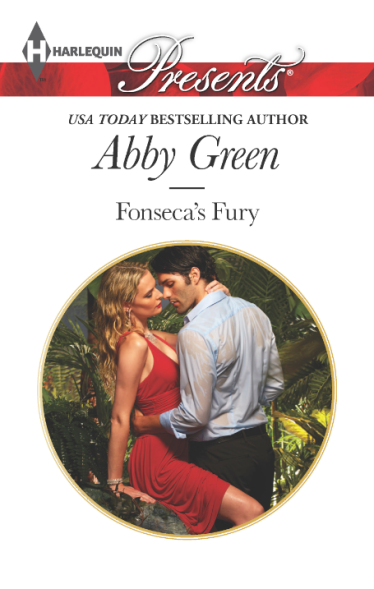
BonAppetit! Fonseca's Fury by Anne Green

A fiery romance novel deserves a flaming cocktail to accompany it and USA Today bestselling author Abby Green’s new tale, FONSECA’S FURY, is no exception. The book has the perfect ingredients for a steamy love story—a Brazilian stud who happens to be a billionaire, a sweet and charitable heroine and a passionate anger that ignites them both. This cocktail is FONSECA’S FURY in liquid form.


The Flaming Fonseca

1 oz. Dark Rum
2 oz. Pineapple Juice
2 oz. Apple Juice
½ oz. Bacardi 151
Gold Cocktail Rim Sugar
Lime

Run a lime along the rim of a highball glass and dip into gold cocktail rim sugar to coat. Pour dark rum, pineapple juice and apple juice into the glass and float Bacardi 151 on top and carefully light the top layer using a long match.

Here is a little more about each book.

Fonseca's Fury by Anne Green


It's hot in the jungle ....

The last time Luca Fonseca saw Serena DePiero, he ended up in a jail cell.  The Brazilian billionaire has since clawed back his reputation, but he's never forgotten her.  So when Luca discovers Serena's working for his charity, his anger reignites!

Serena has changed.  Finally in control of her life, she refuses to let Luca intimidate her.  She'll deal with whatever her new boss throws at her - from a rain-forest trek to the social jungle of Rio!  But she can't handle the passion that flares hottern than Luca's Fury.

Especially when it threatens to consume them both!

You can by Fonseca's Fury here


Never Trust A Cowboy


When a Cowboy Comes Calling ...

The last thing harried Lila Flynn needed was another cowboy to deal with.  But new hire Del Fox was different than most sweet-talking wranglers.  The hard worker had a gentle touch and eyes that spoke of a past he didn't share.  Lila soon found her hardened heart softening, frightening her more than any other hurdles she was facing.

Del's assignment in Short Straw, South Dakota, was meant to be fast and simple.  Falling for Lila Flynn, however, had complicated everything.  If he did his job right it would mean destroying everything Lila had worked for.  He'd given her every reason never to trust him again.  But when all was said and done, would she trust their love enough to give them a second chance?

You can buy Never Trust a Cowboy here.


Snowed In With Her Ex


Trapped in a cabin with the man who makes her want what she shouldn't have .....

Wedding photographer Briana Harper never expected to run into her ex at an engagement shoot!  And when a blizzard strands them...alone...in a remote mountain cabin, she knows she's in trouble. She's never forgotten Ian Lawson, but none of reasons they broke up have changed.  He's still a workaholic. And now he's an engaged workaholic!

But Ian is also still a man who knows what he wants. And what he wants is Briana. Untangling the lies of his current engagement leaves him free to ... indulge. Yet proving he's changed may be this music moguls toughest negotiation yet...

Wednesday, January 07, 2015

Last Words by Rich Zahradnik

In March of 1975, as New York City hurtles toward bankruptcy and the Bronx burns, newsman Coleridge Taylor roams police precincts and ERs. In LAST WORDS by Rich Zahradnik, Taylor searches for the story that will deliver him from obits, his place of exile at the Messenger-Telegram. Ever since he was demoted from the police beat for inventing sources, the 34-year-old has been a lost soul. A break comes at Bellevue, where Taylor views the body of a homeless teen picked up in the Meatpacking District. Taylor smells a rat: the dead boy looks too clean and he’s wearing a distinctive Army field jacket. A little digging reveals that the jacket belonged to a hobo named Mark Voichek and that the teen was a spoiled society kid up to no good, the son of a city official. Taylor’s efforts to learn Voichek’s secret put him on the hit list of three goons who are willing to kill any number of street people to cover tracks that just might lead to City Hall. Taylor has only one ally in the newsroom, young and lovely reporter Laura Wheeler. Time is not on his side. If he doesn’t wrap this story up soon, he’ll be back on the obits page—as a headline, not a byline, in Rich Zahradnik’s LAST WORDS.

Q &A with Rich Zahradnik
author of
LAST WORDS

  • What inspired you to write LAST WORDS?
The story started out as a “what if…?” What if a big-time police reporter were forced to do the dull work of obituaries, always dealing with the dead but never pursuing the why of their deaths.

  • The main character, Coleridge Taylor, mentions music often, are you a fan of the same bands Taylor references? What are your top 3 favorite songs from the 60s and 70s? 

I like most of what Taylor likes, though found out about a lot of the groups later than he did. I was in high school from 1974-78. My group of friends and I thought we were mired in a musical wasteland, disco on the one side and hair bands (Styx, Foreigner, Kansas) on the other. Punk had not reached Poughkeepsie, so I did not become a fan of that music until I reached college, when I discovered the Talking Heads, the Police, and the Ramones. I also became a huge fan of Bruce Springsteen, who was neither punk, nor hair band, just real. My three favorite songs:
  • Thunder Road
  • Pyscho Killer
  • Sweet Jane (with the Intro)

  • Taylor carries a hefty literary name being named after the English Romantic poet Samuel Coleridge. What inspired you to connect Taylor to the English Romantic poet?

Taylor has a poor relationship with his father, an alcoholic English professor. His father gave him that name, and Taylor hates the ornamentation of it. Doesn’t much like his father either. Journalism is pretty much the opposite of poetry. I liked the name for all the contradictions it implies. I’m a huge fan of Morse and really wanted to go the one-last-name-only route, but didn’t want to be too much of copycat. This was my compromise.

  • Taylor works as a journalist in LAST WORDS. What was one of your favorite stories you covered as a journalist?

Covering the Cannes Film Festival. Stars. Glitter. Movies. Business. All wrapped into one two-week long party. At another time, I co-owned a weekly newspaper. Being the news outlet and voice for a community was a real kick, though there were a lot of different stories in there.

  • What makes 1975 so unique? What characteristics and traits define that time period in your perspective?

The year 1975 and the city of New York intrigued me because of the very striking parallels to America today. Then as now, an unpopular war was finally coming to its sad end. A major institution, the city itself, tumbled toward bankruptcy, threatening a cataclysm on the entire financial system. This as banks and ratings agencies ignored the warning signs or willfully misled the public. I chose this time period for the differences as well as the similarities. Solving a mystery in 1975 required good old-fashioned legwork and serious brainwork, rather than science fiction-like instant DNA typing and surveillance video available from any and every angle. Taylor has to find a pay phone when he needs to call someone. There’s something satisfying in that for me. 


You can buy Last Words HERE

LAST WORDS
By Rich Zahradnik
Camel Press
October 1, 2014; $12.49 paperback; $4.95 Kindle
ISBN- 978-1603812078
AISN: B00NY8TK2Y

Wednesday, October 29, 2014

Bad Intentions by Lauren N. Sharman


Blurb:
Diesel and Kady were childhood friends before being forced to marry in a shotgun wedding ceremony. When Diesel decided he needed to prove to himself he could be more than what he was, he left Kady behind, breaking her heart.

Neglected by her family, Kady had been close to Diesel since he saved her life when she was ten. When a misunderstanding made them man and wife, she thought she’d gotten her happily ever after. 

Five years as a bounty hunter has changed everything about Diesel, except his love for Kady. When an old dream reoccurs, warning him she’s in danger, he heads home to protect her.

The Diesel Kady had known has been replaced by a man’s-man that took her breath away. But she’s still hurt; afraid to believe he won’t leave again. When he tells her about the dream, she realizes learning to trust him again is the only way she’s going to survive.

Review:

Diesel Garmin was a hard-working teen with an abusive father when he was forced to marry the very young and shy, timid, Kady, in a literal shotgun wedding. Knowing Kady deserves only the best, Diesel seeks to better himself by leaving; following in his brother Kage's footsteps as a bounty hunter. Five years later, Diesel shows up on Kady’s doorstep, but it's not without consequence. Kady is in awe of the sexy alpha male standing before her, but has a hard time reconciling the boy who left with the man that returned. Adding the fact that she feels she can't trust him, throws a kink into being able to pick up where they left off.

The characters of Diesel and Kady, separately, were exceptional…each growing into their own as adults, but separately from one another. Together as a couple, they’re explosive with sexual tension sizzling in the air around them. I adore Diesel and Kady together because there is a base of best friendship, and knowing that each loved the other in a very special way BEFORE they were forced to get married. They’re so right for each other. There is a purity there that no outside source can possibly touch. As they get older and Diesel comes back home, he's confronted with a very different Kady. She's all grown up, sexy, self reliant; no longer the insecure young girl he left behind.

There are some secondary characters I only wish were actual people, so I could hit them a time or two and make them stop their devious ways. Kage and Diesel, along with Journey and Kady, work well as a team against the villains. You’ll understand what I mean when you read the book. Kage and Diesel have that chemistry only brothers have; quite a few times they made me laugh. Journey and Kady make the perfect sisters-in-law…each needing a true sister to stand by her. There were some funny moments when they were one hundred percent girly girls. I loved it. The twist to this captivating plot was the paranormal element. It was unexpected, but added a bonus of extra flare to Bad Intentions, making the story that much more believable.

Once again, Ms. Sharman has produced a pulse-pounding read with her newest romantic suspense novel, Bad Intentions. She never fails to surprise me with her attention to detail and unique ability to write what, on the outside looks like a typical bad boy, but in such an intriguing way. It's evident that Ms. Sharman is comfortable and confidant in the world in which she writes. Any of her numerous books contain characters I can relate to, and quite honestly, I wouldn't mind being a leading lady of any of those stories. Don't ask me to choose which one, though, because I love all the alphas in all of her books for myriad of different reasons.

The one thing that saddens me is this is the last book in this two book series.  Bad Intentions is the sequel to Reckless Bounty.  Ms. Sharman would make me the happiest girl in the world if, by some miracle, there was a final book that included the McCassey's and the Garmins.  Now that would be an explosive book!  You can buy Bad Intentions here.  


Below is a list of the books in order and their buy links:  

McCassey Series

McCassey Cousins Series

The Garmin Brothers


Monday, October 13, 2014

Ahoy Gum Drop Audiobook by M.M. (Miss Mae) and narrated by Owen McCuen


Blurb:
What if - What if you no longer could find your favorite chocolate in your candy store? What if the store informed you they may never get in a new shipment? Imagine the horror, the chaos, the wailing and gnashing of teeth, not to mention your impending foul-mood. And then imagine this scenario happening on a worldwide scale! What can be the problem? What can be the solution? It’s up to the brave (?) adventurer Sir O. Yuri Wiseguy-eh and his mishaps from Gum Drop Island to boldly (double ?) go where no one has gone before. Yes, they must enter the realm of the forbidding and humuggity shrouded land called Moldy Corners. The next question, dear listeners, is - can what happens in Moldy Corners affect you?

Review:
When I was growing up, we  Charlie and the Chocolate Factory.  For this generation, there is  the magical and mesmerizing story called Ahoy Gum Drop written by M.M. All too often, we try to categorize books by labels such as "children" or "YA". Why can't we have a category for families?  The entire family will get much enjoyment with fanciful characters such as Sir O. Yuri Wiseguy-eh, Mort the Mothball Millionaire, Moose and of course who could forget I.B. Nosey?

There are so many different things I loved about Ahoy Gum Drop. From the quirky characters to the recap of previous chapters, the listener is captivated by both the story line as well as the narrator's hilarious portrayal of the characters. When my kids were little, at bedtime I used to read a chapter each night to them.  Some of the details of the story were lost because my children would forget what may have been read the previous night.  With Ahoy Gum Drop, M.M. makes sure that in the event this story is told over several days, there is a recap with every new chapter.  When I say this is a family book, I truly do mean it.  Although written with children in mind, there are some lines that only adults will understand.  Think if you will, about cartoon movies you have seen with your children.  You could connect personally with the movie because some of the meanings were only understood by adults.

I have previously reviewed Ahoy Gum Drop as an ebook.  I was thrilled to be able to review the audiobook as well.  Ahoy Gum Drop is a humorous and compelling read on it's own as an ebook or print book. However, when paired with narrator Owen McCuen, Ahoy Gum Drop transforms into a standout comical humdinger of a book.  Owen McCuen thrills with the varying accents of each distinct character. Mr. McCuen knows how to attract the listener, make them feel welcome as well as a part of the book.  I look forward to experiencing more of M.M.'s work (she is already a favorite of mine) as well as Mr. McCuen's.  This unexpected duo make magic happen.  Ahoy Gum Drop is a unique and addicting read that will bring back the silly and child in grown ups as well as help us to realize that we should all stop our busy lives long enough to take family time to enjoy this book together.
You can go here to listen to a sample or buy Ahoy Gumdrop here.


Friday, September 05, 2014

Excerpt and Q&A of Accidents of Marriage by Randy Susan Meyers


 Accidents of Marriage 
By 
Randy Susan Meyers 

CHAPTER 1
Maddy 
Maddy ran her tongue over her teeth, imagining the bitter taste of a crumbling tablet of Xanax. After a gut-wrenching day at the hospital nothing tempted her more than a chemical vacation. Nothing appealed to her less than cooking supper. Churning stomach acid—courtesy of work—coupled with anxiety that Ben might come home as frenzied as he’d left made a formidable appetite killer. 
She could bottle it and make a fortune. 
Each morning she spun the wheel on the Ben chart, hoping the arrow would hit happy husband, or at least neutral guy. Today his arrow landed on total bastard, holding her personally responsible for Caleb’s tantrum, which—oh, horror!—had cost Ben twenty minutes of work. 
She considered taking a pill, but the rites of family happiness demanded her attention. Gracie and Caleb sprawled on the rug, recovering from their day at camp: seven-year-old Caleb, half asleep, rubbing his cheek with his thumb; nine-year-old Gracie’s glazed eyes fixed on the television. Emma, her oldest, a day camp counselor at 
fourteen, would be home soon. 
Sluggish inertia kept Maddy stapled to the couch despite her long list of waiting tasks. Chop vegetables, pay the mortgage, and catch up on laundry before the kids ran out of socks. Find a stamp somewhere in the mess she called her desk so she could mail the electric bill. Give her children feelings of self-worth. Plus, since she and Ben had fought that morning, he’d need soothing. Fellatio came to mind. 
Indestructible fabric, the sort bought by parents with children prone to transferring their sticky snacks to the upholstery, prickled against her bare arms. She lusted for air-conditioning as she’d once longed for peace, justice, and her husband. Each suffocating Boston summer their badly wired Victorian became more hateful and Ben’s warnings about global warming swayed her less. According to Ben, her environmental ethics turned situational with each drop of perspiration. 
Pressing the small of her back didn’t ease the permanent knot lodged deep and low, nor did shoving a small hard pillow against it. Her stomach growled despite her lack of desire for food. 
Fish sticks would be easy, but she couldn’t bear turning on the oven. 
The back door slammed. Emma banged her backpack on the table. Her daughter’s way of saying I’m home. 
“Emma?” 
“What?” 
Maddy struggled up from the couch and headed toward the kitchen. “Just making sure it’s you.” 
“Were you expecting someone else?” she asked. 
“It could have been Daddy.” 
“Right.” What an all-purpose word right had become in their family, their polite way of saying, I am acknowledging you have spoken, but am choosing not to engage in any meaningful way. Lately, they used it all too often. 
Newspapers they’d tried to read at breakfast covered half the table. Emma stared into the refrigerator as Maddy gathered the papers, unsure whether to recycle them. Had Ben finished reading the Boston Globe? The New York Times? 
“There’s nothing to eat,” Emma said. “In Caro’s house—” 
The sound of breaking glass followed by Caleb’s scream interrupted before Emma could specify just how superior a shopper Caro’s mother was. 
“Mom!” Gracie yelled. “Come here!” 
Emma followed as Maddy ran to the living room. 
“Jesus, what happened?” Maddy crouched next to Caleb, her stomach dropping at the sight of blood pouring from his foot. Shards of glass surrounded him, liquid droplets of milk clinging to the pieces, a larger white puddle pooling on the wooden floor. She grabbed a wadded-up napkin to staunch the blood, crouching awkwardly to avoid cutting her knees. 
Gracie’s mouth trembled. “I just got up, that’s all, and I knocked over his milk glass. He got mad and screamed, then he stood up and kicked the glass and it broke. He stepped on it. It wasn’t my fault!” 
“It’s okay, Gracie.” Blood soaked through the napkin, dissolving the paper as she exerted pressure. “Emma, get me a damp towel.” 
This was preventable, Ben would say. This is why we have plastic glasses.
“Make it stop, Mommy!” Tears cut through the dirt on Caleb’s cheeks. 
She pressed harder. Gracie mopped the spilled milk with a dirty T-shirt from her backpack. 
“Here.” Emma held out a dripping kitchen towel. 
“You need to wring it out, Emma. Never mind, just get a clean one.” 
Emma stomped out with Gracie in her wake. Wet cloth slapped in the sink. 
“Give this to Mom.” Emma’s voice from the kitchen was extra loud. 
Using the hem of her black cotton skirt, Maddy covered the napkin. Gracie returned with a new towel. Emma watched from the doorway, twirling the bottom of her long brown braid. 
Maddy peeled away her skirt and replaced it with the towel, Caleb whimpering. “Do I have to go to the doctor?” He squinted as peeked under the towel. “It doesn’t look too deep, but it has to be cleaned,” she said. “I don’t think we need a doctor.” Maddy’s pulse calmed. She stopped rushing ahead in her mind: wrapping Caleb’s foot safely enough to hold in the bleeding until they got to the emergency room, packing the kids in the car, calling Ben. She looked again—making sure her decision was based on wisdom and not wishful thinking. It wasn’t gaping. The bleeding had slowed. 
He tried to pull his foot away. “No! No cleaning. It’ll hurt.” 
Emma squatted next to them. “You let Mom wash out the cut and I’ll play Monopoly.” Caleb’s smile came through like a sun shower. 
“That’s sweet, honey.” Maddy should appreciate Emma’s goodness and stop losing patience with her sulks and eye rolling. “Thank you.” 
“Can I play?” Gracie asked. 
“No,” said Caleb. “Just me and Emma.” 
Gracie’s lip quivered at her brother’s words, leaving Maddy torn between soothing and yelling Stop it, especially when she saw Gracie make the tiny sign of the cross she’d picked up from Grandma Frances, Ben’s mother, a woman given to reflexive ritual blessings. Gracie’s gesture unsettled Maddy. Next thing she knew, her daughter would be genuflecting at Our Lady of the Virgins. Buying her a Jewish star or a Unitarian flaming chalice, before Grandma Frances hung a crucifix over Gracie’s bed, went on her to-do list. Mixed marriage only went so far. 
“Monopoly is better with more people, Caleb.” Pregnant women should be required to take classes in referee and negotiation skills along with breathing and panting lessons.
“No. I only want to play with Emma.” 
Gracie pulled at her camp-grimy toes. “How about you and I make chocolate sauce while they play?” Maddy suggested. “We could have hot fudge sundaes for supper.”
“Ice cream for supper?” Gracie raised her chin off her knees. 
“Why not?” She pushed back her daughter’s sweaty black curls, the only visible part of Maddy that Gracie had inherited. The kids divided their parents’ parts and shared few: Skinny Caleb had Ben’s thick brown hair, Maddy’s long lashes and narrow shoulders. Poor Gracie, like Ben, would have to fight a tendency toward getting thick in the middle. Emma, wiry like Maddy, had her father’s sharp cheekbones. 
Emma rolled her eyes. “Healthy, Mom.” 
“Shut up, Emma,” Caleb said. 
“You shut up. Or I won’t play with you.” 
“I’ll play,” Gracie said. 
“No. Emma picked me. Wash my cut, Mommy.” 
*** 
A child leaned on either shoulder. With feet propped on the coffee table, Maddy drifted in and out of sleep. Dirty bowls decorated with blobs of hardened fudge littered the room. After cresting to a quick high of giggles over supper, they’d slumped into queasy sugar comas. 
They stirred at the sound effects of Ben’s nightly return: The car rolling on gravel. Scrape of heat-swollen door opening. Keys dropping on the hall table. Briefcase thudding to the floor. Sighs of relief or disgust indicated his mood level. Despite their early-morning fight, Ben sounded audibly benign. Thank God. Maybe it would be a Swiss night, with the living room their first neutral zone. 
Ben entered the living room and surveyed their collapsed bodies and the scattered Monopoly pieces. Gracie pulled away and ran to him, throwing her hands around his waist. He stroked her black ringlets into a little bundle at the back of her head as she leaned into his slightly softening middle. He had the body of a forty-three-year-old man who fought gravity by playing handball twice a week, but who’d given up crunches. Not bad, but unlike Maddy, who ran and used free weights and the rowing machine in their basement, his battle against time brought fewer visible rewards. 
“What happened?” he asked. “It looks like a war zone.” 
“We had some excitement. Our boy cut himself.” Caleb held out his bandage-swathed foot while still staring at the television. 
“You okay?” Ben asked. He gave Gracie one last pat and went to the couch. “Hurt much?”
Caleb shrugged. “I guess. A little.” He studied Maddy as though seeking the right answer. 
Ben laid a hand on Caleb’s calf. “Can you walk on it?” 
“Sorta. I hop on my heel on that side.” 
“It’s on the ball of his foot. The inside,” Maddy said. 
“How’d it happen?” Ben tugged on his chin—his poker tell that steam could build at any moment. 
Maddy leaned over Caleb and kissed her husband, hitting the side of his mouth he offered. “Forgetting anything?” she asked. “Hello, Maddy? How are you?” 
He exhaled. “Don’t start. I’ve had a rough day.” 
Kissing was starting? It is when you’re being sarcastic, she answered herself, using Ben’s lecture voice. “He fell asleep and then got up without remembering there was a milk glass next to him. It was an accident.” She knew the lie was barely plausible, but she also knew it was just enough for him to avoid being prosecutorial. 
“Where was he sleeping? The recycle bin?” 
“Very funny. A glass broke. End of story.” There. The truth snuck in. 
“Why can’t the kids eat and drink at the table like they’re supposed to? Why weren’t they using plastic glasses?” He ran his hands through his hair. “Look at this place. It’s a mess. No wonder everyone’s always having accidents.” 
Caleb rubbed his thumb back and forth across his knee. Gracie crossed herself. 
“Not now, okay? Please.” She sent him a significant look. 
Ben flexed his shoulders, leaned back on the couch, and stared at the ceiling. He took a deep breath, seeming to remember the anger management sheet Maddy had forced on him six months ago, after he’d thrown a shoe. At the wall, he insisted each time she mentioned the incident. Not at you. But her message had landed. For once, she’d broken through his endless rejections of her careful observations about his temper. 
Good thing. She’d gritted her teeth through his rages, but she’d be damned if their house became a physical battleground. He’d scared himself when he’d thrown the shoe—just as he had years before when he’d thrown a bottle of detergent against the wall. The difference was this time he’d listened to her. He’d read the sheet despite hating it when she supposedly social-worked him. Save it for your clients, he’d yell when she deconstructed him. The children. Their marriage. You’re not my shrink, you’re my wife. 
If he didn’t want her to social-work him, then she sure wished he’d learn to manage his own moods. Maddy’s sister insisted that one day it would be too late for anger prevention sheets and other tricks. Vanessa had no patience for Ben’s rages, but Maddy blamed herself for the antagonism her family felt toward Ben. Maddy overshared. Everything negative, anyway. When had she last called her sister to say things were going great? To brag about Ben taking an entire day to make sure Gracie could ride her bike safely? How often did she mention that Ben took the kids to the movies while she went for a massage? 
At least her mother pretended to love Ben. For which Maddy was grateful. 
“We had ice cream for supper,” Caleb announced. 
Emma’s shoulders squared. Gracie pressed into Maddy. 
Ben turned to Caleb. “Ice cream?” 
“With hot fudge,” Caleb added. 
“Nice to be rewarded for breaking a glass, huh?” Ben kicked off his shoes. “Since I haven’t fallen or broken anything, what do I get for supper?” 
Emma jumped up. “Should I make you eggs, Dad?” 
“Thank you, honey. That would be terrific.” He leaned back and closed his eyes, pushing off his shoes with his toes. 
Gracie tapped his forehead. He blinked and gave her a tired smile. “What is it, cupcake?” 
“Want me to cut up carrots for you?” 
Maddy grabbed the laundry basket from where she’d dropped it in the corner of the living room and hurried out before she had to witness the girls wait on Ben. It drove her crazy watching them being trained in the fine art of placating an angry man, but try explaining that one. What, a child couldn’t feed a hungry father? 
After throwing in a white wash and rummaging through the crowded shelves for fabric softener, she dragged over a small dusty step stool and climbed up, stretching to reach behind the jumble of cleaning supplies. She pulled out a dusty baggie that held a few tablets, took out a yellow one, bit off half, and swallowed it dry. Sometimes she wondered if she could remember all of her caches. Keeping them scattered around the house gave her a convoluted sense of peace and safety. She might reach for one pill in a week; she might reach in every day. Either way, knowing that they were never more than a few steps away comforted her. 
*** 
Back in the kitchen, remnants of Ben’s eggs and carrots littered the countertop. 
She cleared the debris to one side to make sandwiches for the kids’ lunch boxes. Trying to spread cold peanut butter made her hate Ben’s mother. Frances had spent the past forty-six years appeasing Ben’s father’s neuroses by keeping a spotless house and refrigerating peanut butter, on constant guard against food poisoning, bacteria, and dust. 
Because of Frances, they ate hard peanut butter. 
The bread tore. She folded it around the wad of Skippy and shoved it in her mouth. Then she got a fresh slice and began making the sandwiches again: grape jelly for Caleb, blueberry for Gracie, and for Emma, Maddy’s mother’s homemade orange preserves. 
Anger exhausted her. She waited for the kiss of Xanax to kick in, Prince Charming bearing a sheath for her nerves. 
Ben hadn’t cared if they ate hot mayonnaise and slept on typhus-encrusted sheets when they’d met, not while they burned off the searing heat of their early years. He’d been exciting, her Ben, a public defense lawyer demanding the world give his wrecked clients a break—a little justice, a fair shot. She could barely breathe around him, some part of her always needing to touch some part of him. Her hand on his shoulder. An ankle casually leaning against his calf. 
Ben dwarfed everyone, racing through life with exclamation points coming out all sides. Poverty to the right? Boom! Racism? Pow. Dirty landlords? Gotcha! 
Who knew all that passion and rage could be directed at a late car payment? A missing button. 
Her.


Accidents of Marriage – Q&A

1. Can you tell us a bit about the book and the relationship between the characters?
Accidents of Marriage asks what is the toll of emotional abuse on a family. It’s an account of life inside a marriage that seems fine to the outside world, an account of emotional abuse, traumatic injury, and how a seeming accident is really the culmination of years of ignored trouble. It’s the story of an unexpected gift of clarity making the difference between living in hell and salvation. 
For Madeline Illica, the love of her husband Ben is her greatest blessing and biggest curse. Brilliant, handsome and charming, Ben could turn into a raging bull when crossed—and despite her training as a social worker Maddy was never sure what would cross him. She kept a fragile peace by vacillating between tiptoeing around him and asserting herself for the sake of their three children, until a rainy drive to work when Ben’s temper gets the best of him, and the consequences leave Maddy in the hospital, fighting for her life. 
Accidents of Marriage, alternating among the perspectives of Maddy, Ben, and their fourteen-year-old daughter, Emma, takes us up close into the relationships between all family members. The children, lost in the shuffle, grasp for sources of comfort, including the (to them) mysterious traditions of their Jewish and Catholic grandparents. Emma and her grandparents provide the only stability for the younger children when their mother is in the hospital. Ben alternates between guilt and glimmers of his need to change, and Maddy is simply trying to live.  Accidents of Marriage reveals the challenges of family, faith, and forgiveness.

2. How many different titles did you experiment with before deciding on Accidents of Marriage? 
My first working title was A Thousand Suppers (which comes from a line in the book, but ultimately made no sense out of context.) The title I used when I presented it to my editor was simply Maddy & Ben. After many long sessions with poetry books, anagrams of words, and other methods that I use, I came up with Accidents of Marriage.

3. How has working with batterers and victims of domestic violence influenced your writings?
Working with batterers taught me far more than I can put in a paragraph, but here is my version of the most important take-away: Never underestimate the hatred some men have of women. Never think that people (other than the truly damaged)  ‘snap’. If they chose to find it, people can access at least a sliver of decision-making. We have agency. We do not choose to hit and scream at our bosses. We choose to hit and scream at people in our homes. The hierarchy of power always comes into play.
Women (and men) do not choose abusive people as their loves—they pick the charming folks they meet in the beginning of a relationship. There might be signs to look out for, but abusers keep those traits in check until the relationship has solidified, when breaking up is more difficult.
There is not a black and white line between being abusive and not being abusive. There is a continuum of behavior, and most of us fall on the wrong side of the best behavior at some point—whether is be yelling, silent treatment, or some other hurtful conduct. Learning that this can be controlled is a job for everyone.
Batterers can change; we can all change our behaviors, but most often we choose not to do the difficult work that change requires. This is something I hope I bring to my writing.

4. Can you discuss the role of Maddy and Ben’s daughter in the book? 
Emma is an average teenager who is thrown into very un-average circumstances. She becomes the stand-in mother, a role she takes on without credit or even being noticed. She is also the keeper of secrets, an impossible position for her to take on. In every stage of her family’s trauma, she is the silent absorber, who ultimately will break or find strength.

5. How did you portray someone with a traumatic brain injury so well? 
I did an enormous amount of study. Luckily I find medical research fascinating. My shelves are crammed with memoirs of those with TBI and caretakers of those with TBI, workbooks for those with TBI, and medical texts—as well as spending time on line reading medical information for those in the field and information for those affected by brain injury. I had someone in the field read the novel and am also lucky enough to have a doctor in my writer’s group.

6. Did you have any say in choosing the cover for the book?
Yes! The final cover was the fourth one presented. It was tough finding the right ‘mood’ for the cover, but I was very pleased with the final version. Of course, most authors (including me) would love to actually design the cover, but my guess is our final products would not be the graphic success we imagine.

7. What made you choose a car crash as the tragic turning point between Ben and Maddy?
Abusive and bullying behavior very often plays out in driving. Road rage is a real problem on our motorways and seemed the logical vehicle for demonstrating how Ben’s bad choices result in devastating consequences.

8. Parts of this story make the reader begin to empathize with Ben. Why did you choose to do this?
I don’t believe books that present characters as all good or all bad can adequately capture life’s totality or experiences. It’s important for me to tap into how we are all the stars of our own show and how we often convince ourselves why it is ‘okay’ to act in awful ways.  Ben is not all bad, despite doing awful and bad things. The question I explore about Ben (among others) is can he change? Is he, are we, capable of change, and if so, how does will and can that change manifest?

9. Is Maddy modeled after anyone that you know?
Maddy is modeled after about a thousand people I know—including myself and my friends and family. Most of us have some Maddy in us, at least at some point. We close our eyes to the worst, or we use drugs or alcohol or food or something else to tamp down our feelings. We live in a maelstrom of problems and pretend it’s all okay. We deny and lie to ourselves. Until we can’t anymore.

10. What do you hope readers will take away from reading Accidents of Marriage?
Abusive behavior is wrong, whether it is physical, emotional, verbal or any other type of hurtful behavior. It overwhelms a family. Raising children with verbal and emotional violence is harmful and the ramifications last forever. 
Most important, we can control our behavior.
But, most of all, I hope readers take a page-turning story from my book. I don’t write to lecture; I write to tell the stories that mesmerize me, and thus, I hope, fascinate others.